Wheels 8 min read
Brent Model C Review: Who It's For and What Breaks First
Brent Model C review: 3/4 HP, 225 lb capacity, 10-year warranty, $2,100-2,300 street price. Who it's built for, what breaks first, and when to buy the B.
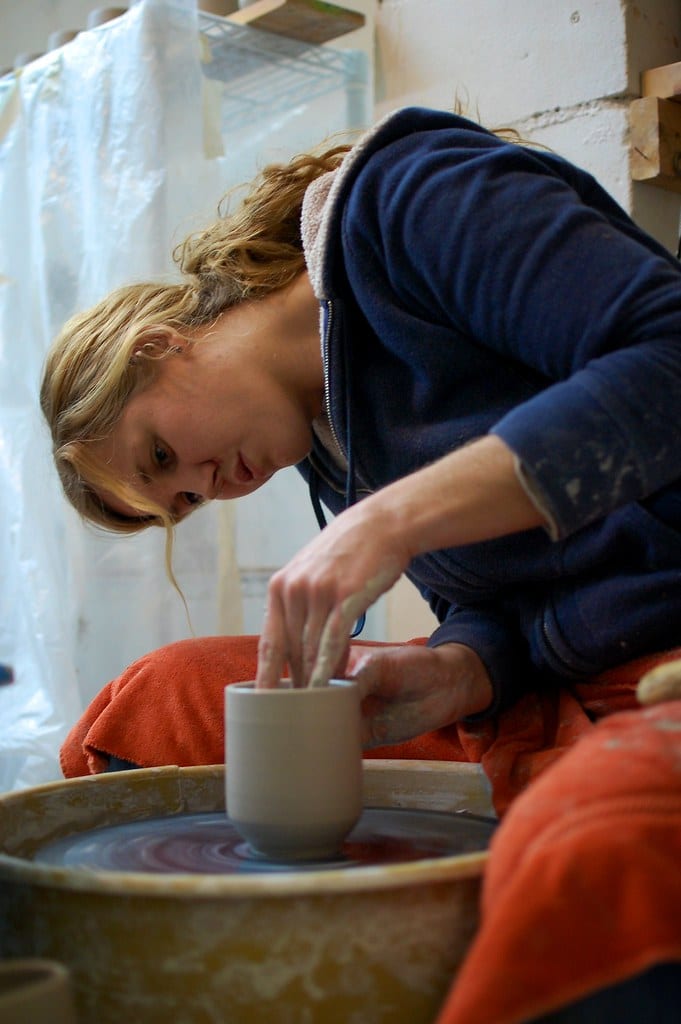
The Brent Model C is the wheel that appears in pottery programs, teaching studios, and serious home setups and keeps running for decades. It is a 3/4 HP belt-drive wheel with a 225-pound continuous centering rating, a 14-inch cast aluminum head, and a 10-year warranty from AMACO Brent. Street price lands between $2,100 and $2,300 at most authorized dealers. The MSRP is $2,800, but authorized dealers routinely list it lower, and it ships with a splash pan and a 14-inch Plast-i-Bat included.
The short answer for someone deciding between the B, C, and CXC: the Model C is the middle wheel for a reason. The B (1/2 HP, 150 lb rated) is sufficient for hobbyists who throw under 10 pounds per session. The CXC (1 HP, 300 lb rated) is production-scale capacity at a higher price. The Model C is what teaching studios buy because it handles everything students attempt without the CXC’s extra cost, and it’s what serious home potters buy because they know they’ll never outgrow it.
Specs and what they actually mean
| Spec | Brent Model C |
|---|---|
| Motor | 3/4 HP permanent magnet DC, 7 amps |
| Centering capacity | 225 lbs continuously |
| Wheelhead | 14” cast aluminum with bat pins |
| Speed range | 0-240 RPM, reversible |
| Voltage | 110V standard (220V by request) |
| Dimensions | 21” W x 26.75” D x 19.75” H |
| Weight | 121 lbs |
| Warranty | 10 years |
| Included | Splash pan + 14” Plast-i-Bat |
| Street price | $2,050-2,300 (MSRP $2,800) |
Specs from AMACO official product page and The Ceramic Shop dealer listing, verified June 2026. Street price from The Ceramic Shop and The Studio Manager buyers guide, June 2026.
A note on the 225-pound spec: this is a continuous-load rating describing what the motor can spin, not an invitation to center a 225-pound block every session. Ask potters in teaching studios who throw on these wheels daily, and most report they rarely push past 25 to 40 pounds per throw. The rating’s practical value is in the headroom it creates at low RPM. When you’re pulling the walls of a large piece and you’ve loaded the clay heavily in one direction, a 3/4 HP motor doesn’t lug, stall, or slow. That’s where you feel the difference between a Model C and a motor running at its ceiling.
Belt drive: the technical choice that defines the wheel
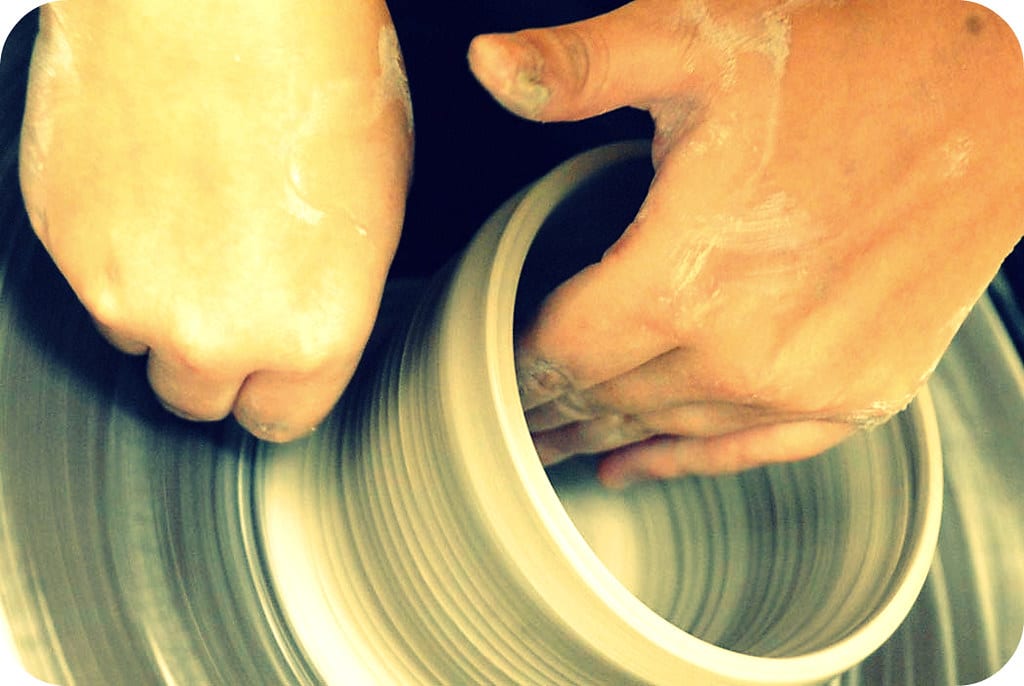
The Brent Model C is a belt-drive wheel. The motor connects to the wheelhead through a rubber drive belt and a layshaft rather than directly coupling motor to spindle. This is the same configuration as the Brent B and CXC, and it’s the design that defines the Brent identity against direct-drive alternatives like the Shimpo/Nidec VL-Whisper.
What belt drive gives you: very good torque at low RPM (the belt transmission keeps the motor in its efficient range while the head turns slowly), and physical separation between the motor and the throwing surface so clay slurry and water don’t reach the motor. What it costs you: periodic belt inspection and eventual belt replacement. The belt is the primary wear item on a Brent wheel. It’s inexpensive, sold directly through AMACO and most ceramic supply dealers, and the replacement procedure is covered in the manual. In a teaching studio running multiple students daily, the belt might get checked annually. In a home studio running three sessions a week, you might go years without touching it.
The automatic belt tensioning system is part of what makes the Brent low-maintenance rather than high-maintenance. You don’t need to adjust belt tension manually as the belt stretches; the mechanism compensates. The manual’s primary belt guidance is “inspect periodically for cracking or fraying” and “replace when worn.” There is no scheduled replacement interval in the official documentation.
The direct-drive alternative (Shimpo VL-Whisper, at a similar price point) eliminates the belt entirely: motor couples directly to wheelhead, nothing to inspect, near-silent operation. The tradeoff is that direct-drive wheels typically feel different at very low RPM under load. For potters who throw at night in apartments or shared spaces, the belt-drive vs. direct-drive question is real. For everyone else, belt drive at this price tier is the standard.
Who should buy the Brent Model C
The case for it: a serious hobby potter who throws regularly, someone who teaches private lessons, a community studio starting from nothing. The 10-year warranty is the real anchor. The wheel is designed to outlast the warranty by a significant margin. Studios report wheels running 20 or more years with maintenance. That longevity changes the math on a $2,100-2,300 purchase. Amortized over 15 years of use, the cost per year is in the range of a good tool rather than a luxury.
The case against it: a beginner who hasn’t committed to the craft yet. The Speedball Clay Boss runs under $600 and handles everything a beginning potter needs for several years of growth. If pottery sticks, you upgrade; if it doesn’t, you haven’t spent two thousand dollars finding out. The pottery wheel buying guide has the full comparison matrix.
What goes wrong and what doesn’t
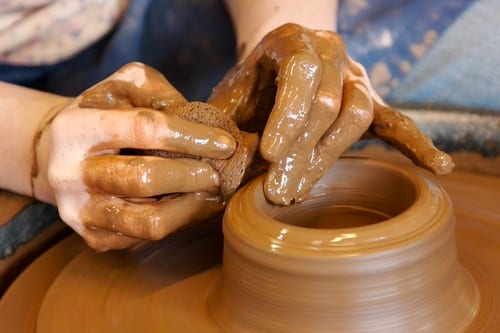
The most common failure mode reported by studio owners is beginners flooding the splash pan with water. The Brent splash pan is wide and deep compared to most competitors, but fill it past its capacity with slurry and water and some will eventually migrate toward the housing. Brent designs to resist this, but no wheel is fully sealed against a consistently overflooded pan. The fix is operational: teach beginners to work with a sponge and bucket rather than filling the pan.
The second is motor noise over time. New Brent wheels are quiet. A wheel that’s been used hard for several years in a teaching environment will develop some bearing noise as the motor brushes and bearings accumulate wear. AMACO’s parts catalog lists replacement components at defined prices. Repair is possible without returning the wheel to the factory.
One thing that doesn’t fail: the table and legs. The Brent’s heavy plastic table and powder-coated steel legs have a reputation as among the sturdiest in the industry. The table resists clay impact and the chemical cleaning compounds potters use, and the legs don’t wobble even under a heavy throwing session.
The splash pan fit question comes up in forum discussions about older vs. newer Brent models. Pans from pre-2010 models don’t always fit post-2010 machines without modification. Buying a replacement pan from AMACO for a modern machine doesn’t have this issue. If you’re buying a used Brent from an older generation, verify the pan model before assuming it fits.
The used-wheel calculation
Brent Model C wheels hold their value. Used ones on Craigslist and Facebook Marketplace run $900 to $1,400 for working condition, sometimes more for recently serviced machines. At $1,000 for a used Model C vs. $600 for a new Speedball Clay Boss, the used Brent becomes competitive for someone who wants the belt-drive character and the longer motor life, not just the brand name.
The used-wheel inspection checklist: test the foot pedal through its full range (no dead zones, no sticky spots), run the wheel at low RPM under your hand’s resistance (motor shouldn’t lug or smell), confirm the belt looks clean without visible cracking or glazing, check that the wheelhead spins true without wobble. A wobble in the head usually means a bent spindle or worn bearings, both of which add cost to the repair side of the purchase equation.
Electrical and setup
The Model C runs on 110-120V at 7 amps. Standard household outlet. No dedicated circuit required, no electrician visit, no 240V wiring. The 7-amp draw is modest enough that you can run the wheel and a small kiln on separate circuits in the same garage without panel concerns, assuming the circuits are properly rated. The Skutt KM-1027 review covers the kiln side: a studio kiln draws 240V at 48 amps and needs its own dedicated circuit, separate from the wheel’s 120V outlet.
If you’re building a studio with multiple wheels running simultaneously (teaching studio, group workshop), put each wheel on its own 15-amp circuit. Seven amps per wheel leaves headroom, but stacking multiple wheels on one circuit adds startup-surge load that can trip breakers during a class.
The bottom line
The Brent Model C costs roughly four times a Speedball Clay Boss and lasts, realistically, two to three times as long in heavy use. For a home studio where you throw three times a week for years, the total cost of ownership calculation favors the Model C over repeat beginner-wheel purchases. For someone who wants to test pottery before committing, it doesn’t. That’s the whole decision.
The ten-year warranty matters because it signals what AMACO is willing to stand behind. Parts are available, repair documentation exists, and service is possible without sending the wheel back. This is not universal in the pottery wheel market.
When you’re ready to think about the kiln side of a studio setup, the Skutt KM-1027 review covers the kiln that pairs most naturally with a serious throwing practice.