kiln-comparisons 5 min read
Paragon Caldera vs Skutt KM-818: Plug In or Wire Up
The Paragon Caldera runs on 120V household power at about $0.75 per glaze firing; the Skutt KM-818 needs a 240V 40-amp circuit and fires far more per load.
The Paragon Caldera runs on household power and fires test tiles for under a dollar per firing. The Skutt KM-818 needs a dedicated 240-volt circuit and fires a full load of functional pottery for under ten dollars. These kilns are not really competing for the same buyer. They serve different scales of work, and the decision between them is almost entirely a question of what you make.
At Sheffield Pottery in June 2026: Caldera at $1,620 on sale, KM-818 at $2,084 on sale.
The comparison table
Specs verified against Sheffield Pottery and Paragon Technologies (Caldera) and Sheffield Pottery and Krueger Pottery Supply (KM-818), June 2026. Cost-to-fire figures use L&L’s segment duty-cycle method on each kiln’s rated wattage; rate from the EIA, March 2026.
| Specification | Paragon Caldera | Skutt KM-818 |
|---|---|---|
| Interior volume | Small (jewelry/test tile scale, max ~6” height) | 2.6 cu ft |
| Interior dimensions | Small chamber | 18” x 18” x 18” |
| Maximum temperature | Cone 10 (2,350°F) | Cone 10 (2,350°F) |
| Voltage | 120V | 240V |
| Amperage draw | ~14A | 27.75A |
| Wattage | 1,680W (1.68 kW) | 6,660W (6.66 kW) |
| Required breaker | 15-20A (standard household) | 40A dedicated |
| Wire | Standard household (no new wiring) | 8 AWG copper |
| Receptacle | NEMA 5-15 (standard outlet) | NEMA 6-50 |
| Controller | Paragon Sentry 2.0 | Skutt FireBox |
| Warranty | 1 year | 1 year |
| Price (Sheffield, June 2026) | $1,620 sale / $1,980 regular | $2,084 sale / $2,605 regular |
| Bisque firing cost (Cone 04) | ~$0.45 | $5.35 |
| Glaze firing cost (Cone 6) | ~$0.75 | $8.91 |
| Combined bisque + glaze cycle | ~$1.20 | $14.26 |
Cost-to-fire computed from each kiln’s wattage using L&L’s segment duty-cycle method. Rate from EIA Electric Power Monthly, March 2026, $0.1783/kWh.
The 120-volt decision
The Caldera’s most significant practical feature is its power requirement. It plugs into the same outlet as a lamp. No electrician, no panel evaluation, no dedicated circuit run, no 240-volt receptacle installation. The kiln arrives at your door and fires that day.
That matters more than it sounds. Installing a 240-volt, 40-amp circuit in a house that does not have one involves an electrician evaluation, panel capacity assessment, possible panel upgrade, permit filing in many jurisdictions, inspection, and installation cost that typically runs $300 to $800 or more depending on the panel location and run distance. In a rented space, it may not be possible at all.
The KM-818 requires 240 volts, 27.75 amps of draw, and a 40-amp dedicated circuit per NEC continuous-load rules (27.75 x 1.25 = 34.7A, rounded up to the next standard breaker size). The circuit needs 8 AWG copper wiring and a NEMA 6-50 receptacle. That is all standard electrical work, but it is not a plug-in installation.
What each kiln can actually fire
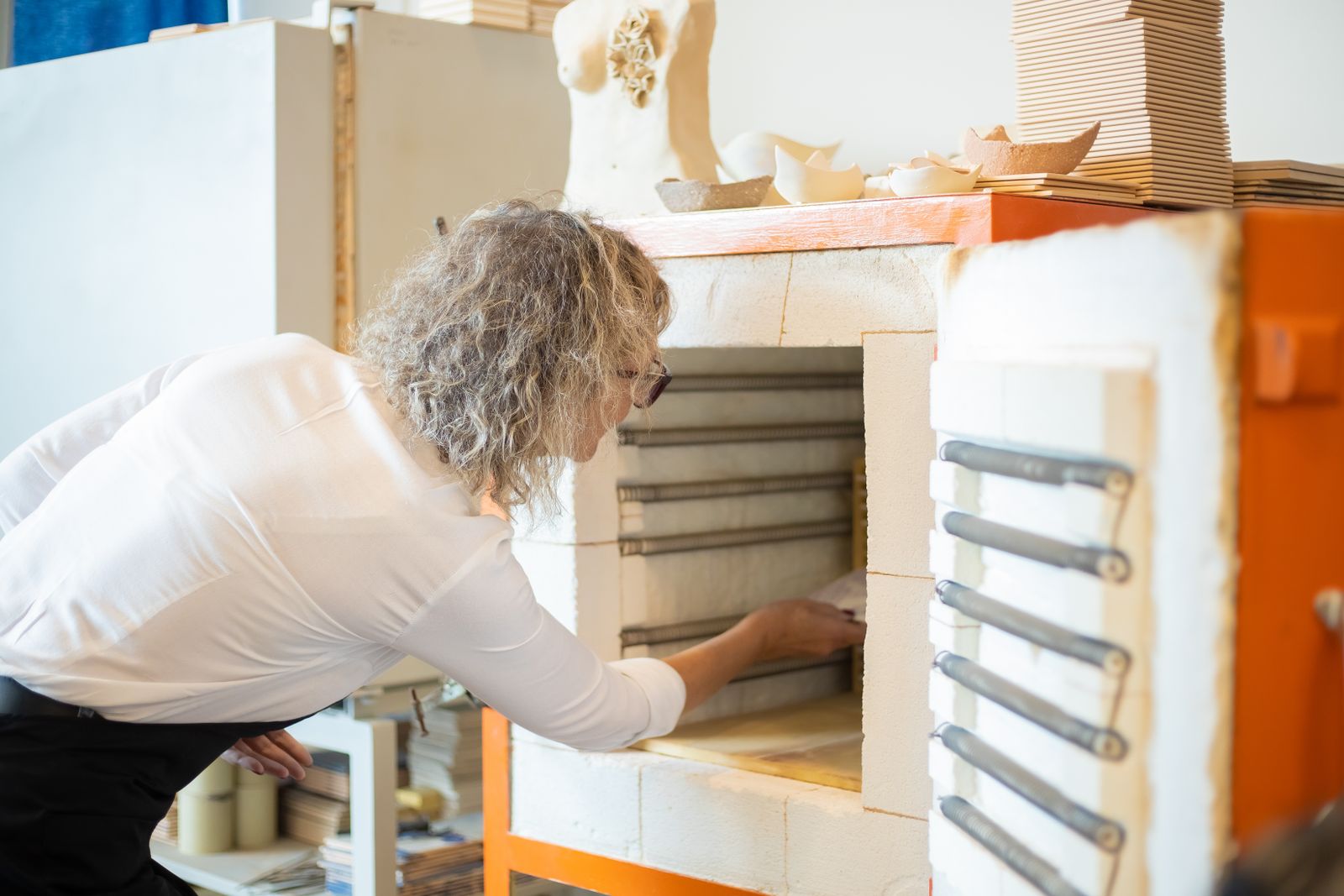
The Caldera is a jewelry and test-tile kiln. Its small chamber fires pendants, earrings, brooches, beads, enameled metal work, small ceramic tiles, and sculptural pieces that fit inside the chamber with clearance on all sides. Paragon documents pieces up to approximately 6 inches in height or diameter as typical work. The Caldera is not a production pottery kiln, and loading it with mugs or bowls is not its design intent.
The KM-818 is a functional pottery kiln at the smaller end of the home studio range. Its 18 x 18 x 18 inch interior holds a typical mixed glaze load of 20 to 30 mugs, bowls, and small plates in a single firing. It handles standard dinnerware, small vases, sculptural work up to 18 inches tall, and the full range of studio pottery production. For a solo home potter who produces consistently but not at high volume, the KM-818 is sized correctly.
Firing cost in context
The Caldera costs $0.75 per glaze firing. The KM-818 costs $8.91. The comparison sounds decisive until you consider what each firing produces.
A $0.75 Caldera firing might produce 20 test tiles or 10 small pendants. An $8.91 KM-818 glaze firing produces a full load of functional pottery. Per piece of functional ware, the KM-818 is not necessarily more expensive than the Caldera would be if you tried to fire the same volume of work one small batch at a time.
The Caldera’s low firing cost makes it economically sensible for its intended work: small pieces fired occasionally. Firing jewelry in a KM-818 would cost $8.91 per session regardless of how little fit inside. Firing the same jewelry in the Caldera costs under a dollar.
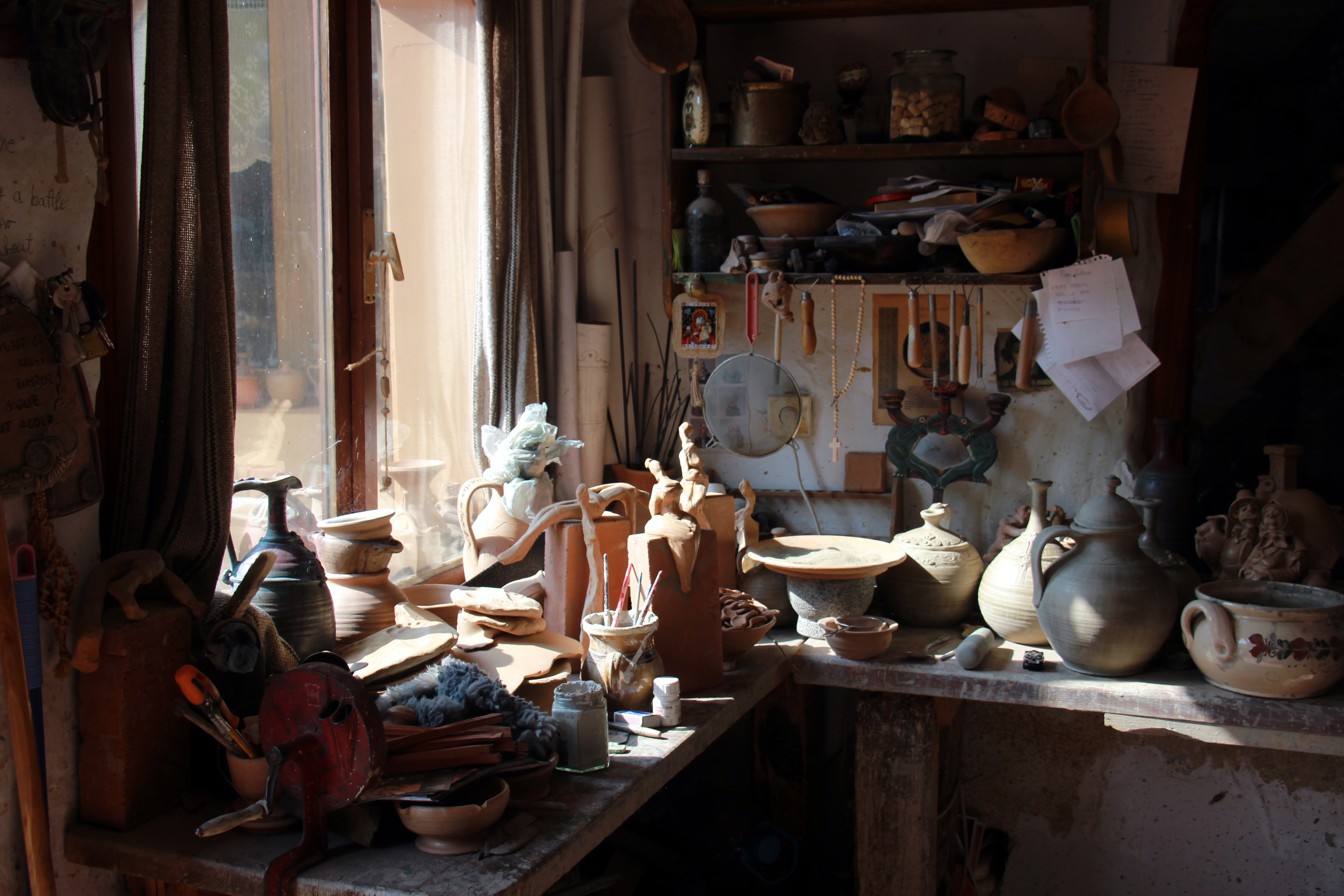
Using the Caldera as a test kiln for larger work
Some potters buy a Caldera specifically to test glazes before committing full loads to their production kiln. This works, with a caveat: small kiln interiors run hotter and less evenly than larger kilns. A test tile fired in the Caldera may show slightly different results than the same glaze in a KM-818 or larger kiln, because the thermal environment (mass, atmosphere, rate of temperature change) differs.
Test tile results from the Caldera give directional information. Colors and surface textures from a Caldera test will generally translate to a larger kiln, but potters who do critical glaze development expect some variation and fire actual test tiles in the production kiln before committing to a full production run.
For most home studio pottery work, a Caldera test followed by a production KM-818 firing is a useful workflow. The Caldera catches obviously wrong glazes before they consume a full firing.
Verdict
Buy the Caldera if your primary work is jewelry, enameling, small sculptural ceramics, or test tiles; you rent your studio or cannot install a 240-volt circuit; you want a kiln that fires today without any electrical preparation; or you are adding a small plug-in kiln to complement an existing studio setup. See the full Paragon Caldera review for the complete spec table and owner picture.
Buy the KM-818 if you make functional pottery (mugs, bowls, plates, vases) at any regular volume; you can install a 240-volt, 40-amp circuit or already have one; or you want a kiln that grows with a solo studio practice from beginning through experienced production. See the full KM-818 review for the detailed electrical and firing walkthrough.
For the next size up from the KM-818, the KM-1027 vs KM-1018 comparison covers the decision at larger Skutt scale. For the full new-buyer decision, the first kiln buying guide starts from the studio situation and works forward.